Helping Nature
Nature & biodiversity in Bishop’s Park — a thriving urban oasis on the banks of the Thames.

Like many of London’s green spaces, Bishop’s Park is more than just a place to walk, relax, or play — it’s a thriving urban oasis, alive with wildlife. From ducks, geese and dragonflies by the pond, to bees, butterflies, foxes, stag beetles and bats, the park is teeming with life.
As the Friends of Bishop’s Park, one of our central aims is to protect and enhance this rich natural life. In the last couple of years we’ve been putting biodiversity front and centre, working closely with the Council, local volunteers, and conservation experts to improve habitats for the wildlife that calls this park home. In late 2024, an ecological survey awarded Bishop’s Park (including Fulham Palace and All Saints Churchyard) a Grade 1 Site of Borough Importance — a high conservation rating recognising rare or locally scarce species.
What we’ve done so far
Bird & bat boxes
Together with the Council we have installed many bird boxes (and a few bat boxes) around the park. These provide safe nesting spaces and have proven very successful.
Stumperies for insects & fungi
Several stumperies — arrangements of half-buried logs — are in place across the park, creating shaded, moist habitats ideal for insects, fungi and mosses.
Wildflower meadow
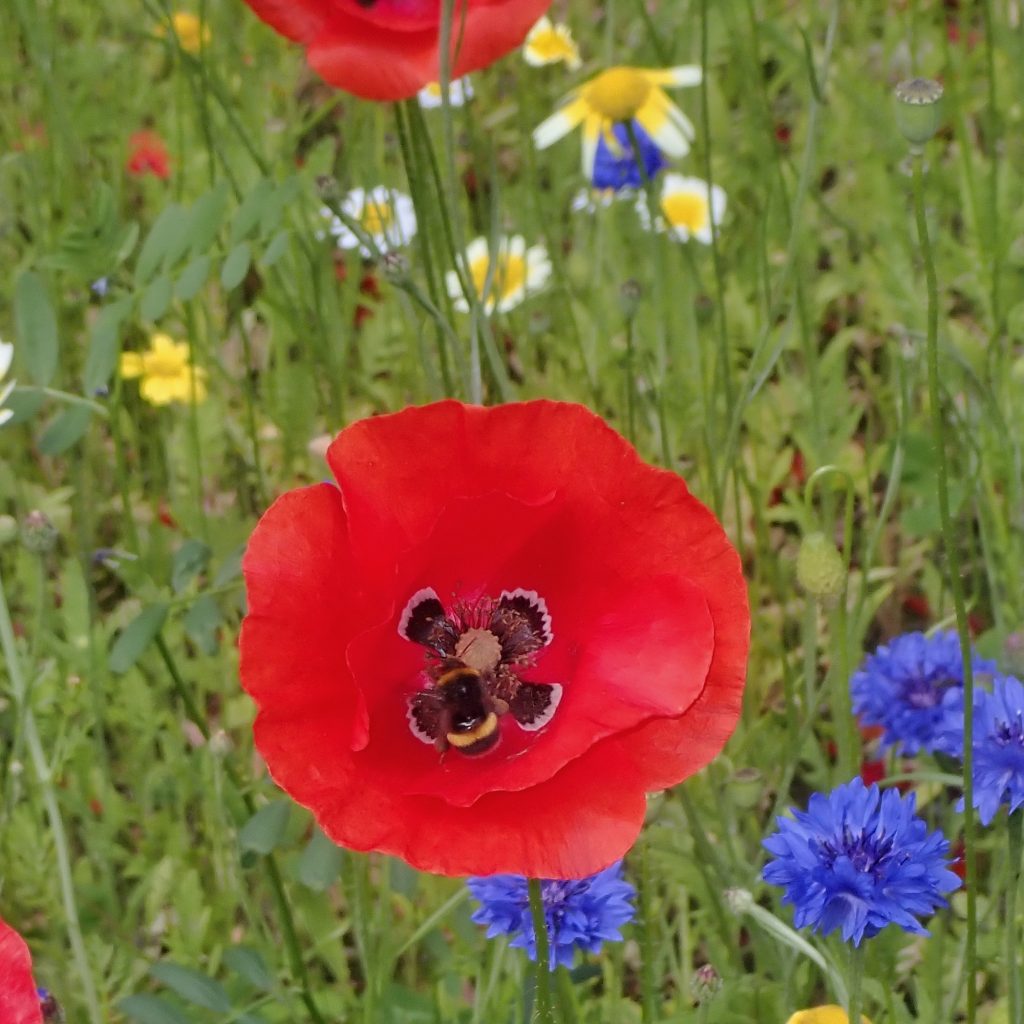
In Summer 2024 we sowed our first wildflower meadow in the Moat Garden with native annual and perennial flowers. In Autumn 2025 we sowed a second, and hope to see both bloom in Spring 2026.
Invasive species removal
Following expert advice, we’ve been removing invasive green alkanet from the Moat Garden throughout 2025. Thanks to local volunteers and a corporate day with Irwin Mitchell, native plants are now returning.
Big Butterfly Count
We took part in the national survey in Summer 2025. One survey by the pond recorded 21 butterflies and 9 different species — our highest ever result.
Working together
All of this happens hand in hand with the Council, conservation experts and our wonderful local volunteers. There’s always room for more helping hands.
Plans for 2026
- Planting for the pond: the pond has excellent marginal vegetation but no submerged plant life due to a concrete base. We’re exploring nature-friendly planting for Spring 2026.
- Planting for pollinators: the Council are supporting flowers and plants in a couple of areas — nicer to look at, and good for pollinators.
- More stumperies & conservation areas: new spots for another stumpery, and areas where we let the grass grow longer. Look out for signs explaining these zones.
- Removing invasive species: green alkanet is growing back fast in parts of the Moat Garden — we’ll remove as much as we can in Spring with members and volunteers.
Bishop’s Park Interactive Nature Map
This map contains all the nature initiatives around the park. Open it in a new window to show or hide the layers.
Recording nature sightings
Help build the record of life in the park.
iNaturalist
A social network for naturalists — record your observations of plants and animals and learn about nature in your area. Please contribute observations for Bishop’s Park.
iRecord
You are also encouraged to record observations of plants and animals on iRecord.
Big Butterfly Count
The Big Butterfly Count takes place across the UK each summer. Get involved by downloading the app and submitting a recording in the park.
Together, we can help nature thrive in Fulham
We are always looking for enthusiastic and interested people to get involved and become members of the Friends group. Join Friends of Bishop’s Park today, and be a friend to nature.